



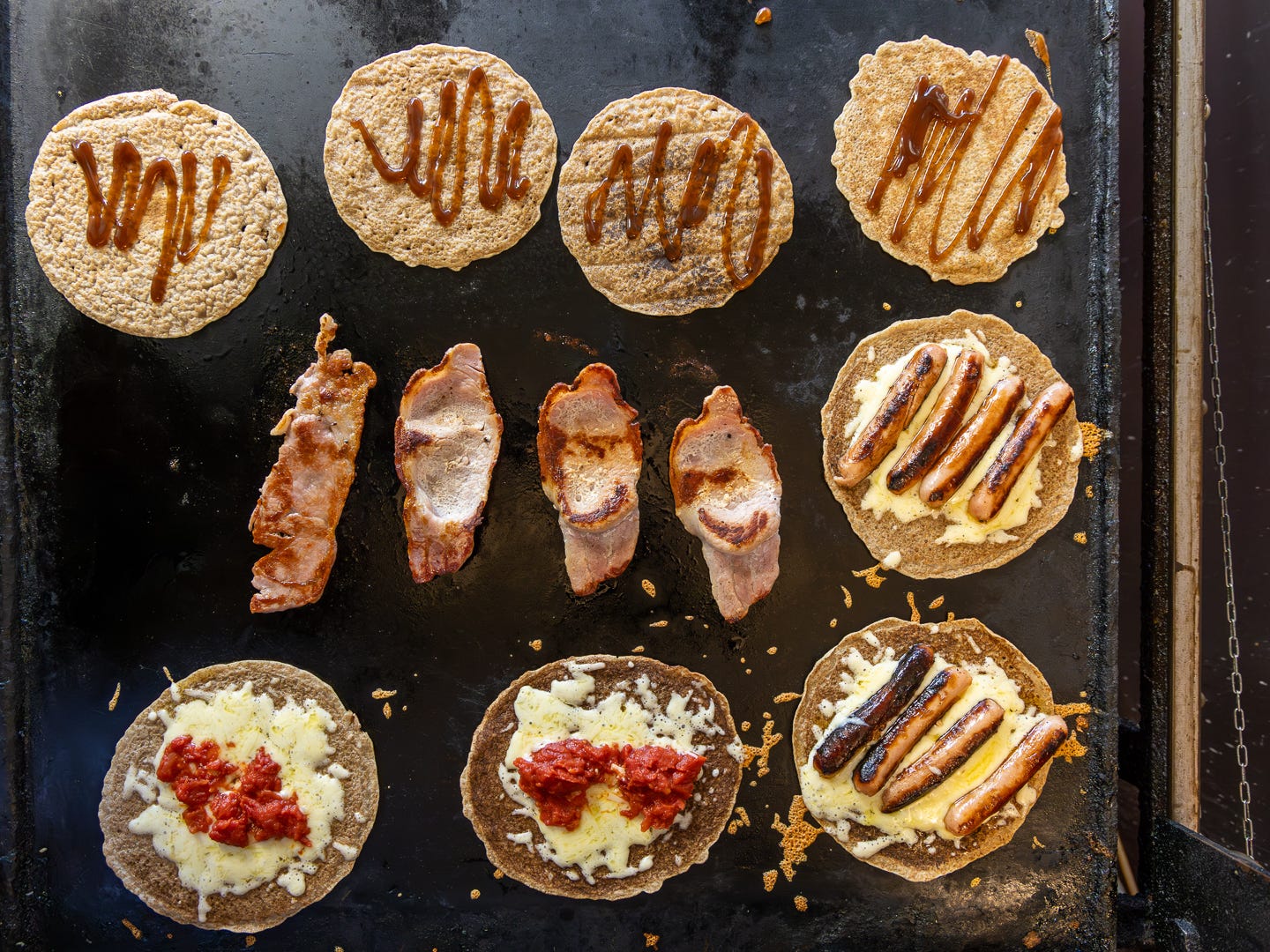
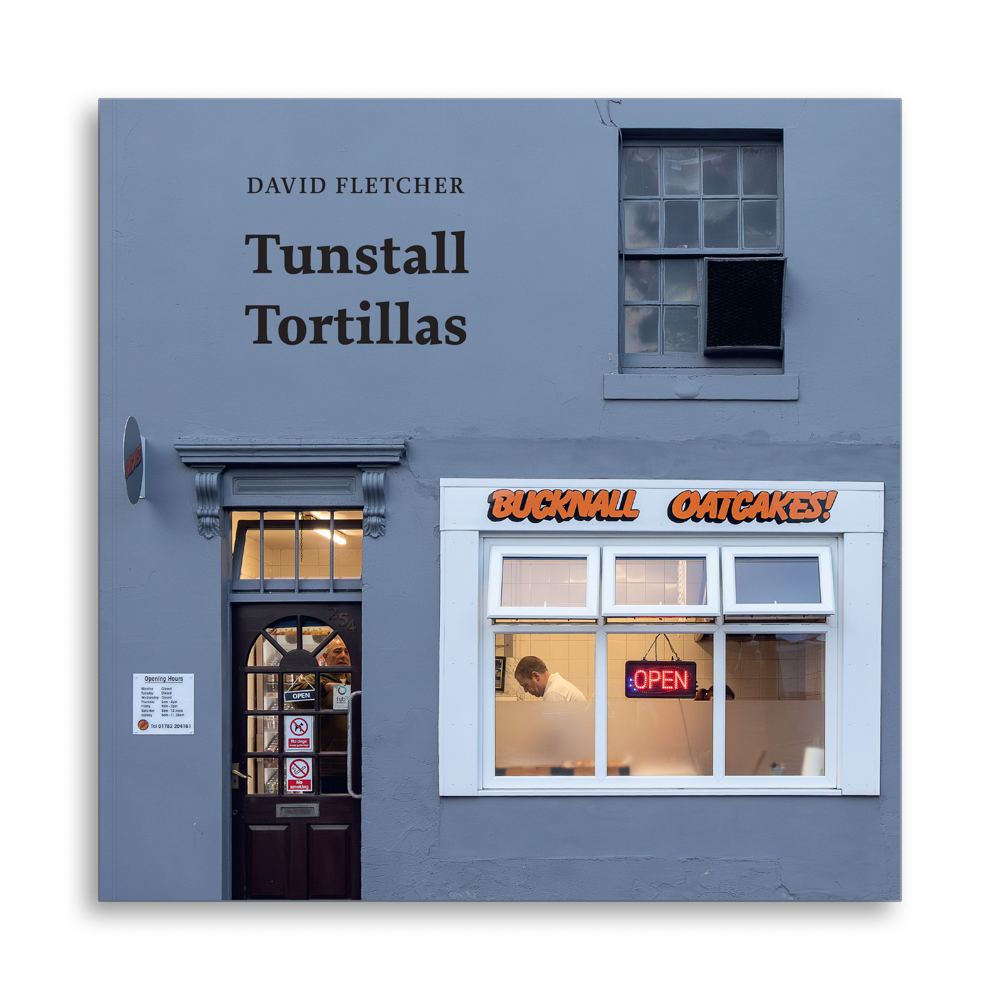
Originally from Stoke, award-winning photographer David Fletcher’s latest book, Tunstall Tortillas, saw him direct his lens towards the city’s beloved oatcakes and the people who make them. The title of the book was inspired by Arthur Berry’s poem, Ode to the Oatcake, which affectionately refers to our famous fare not only as a Tunstall tortilla but also a ‘clay suzette’ and ‘potteries papadum.’
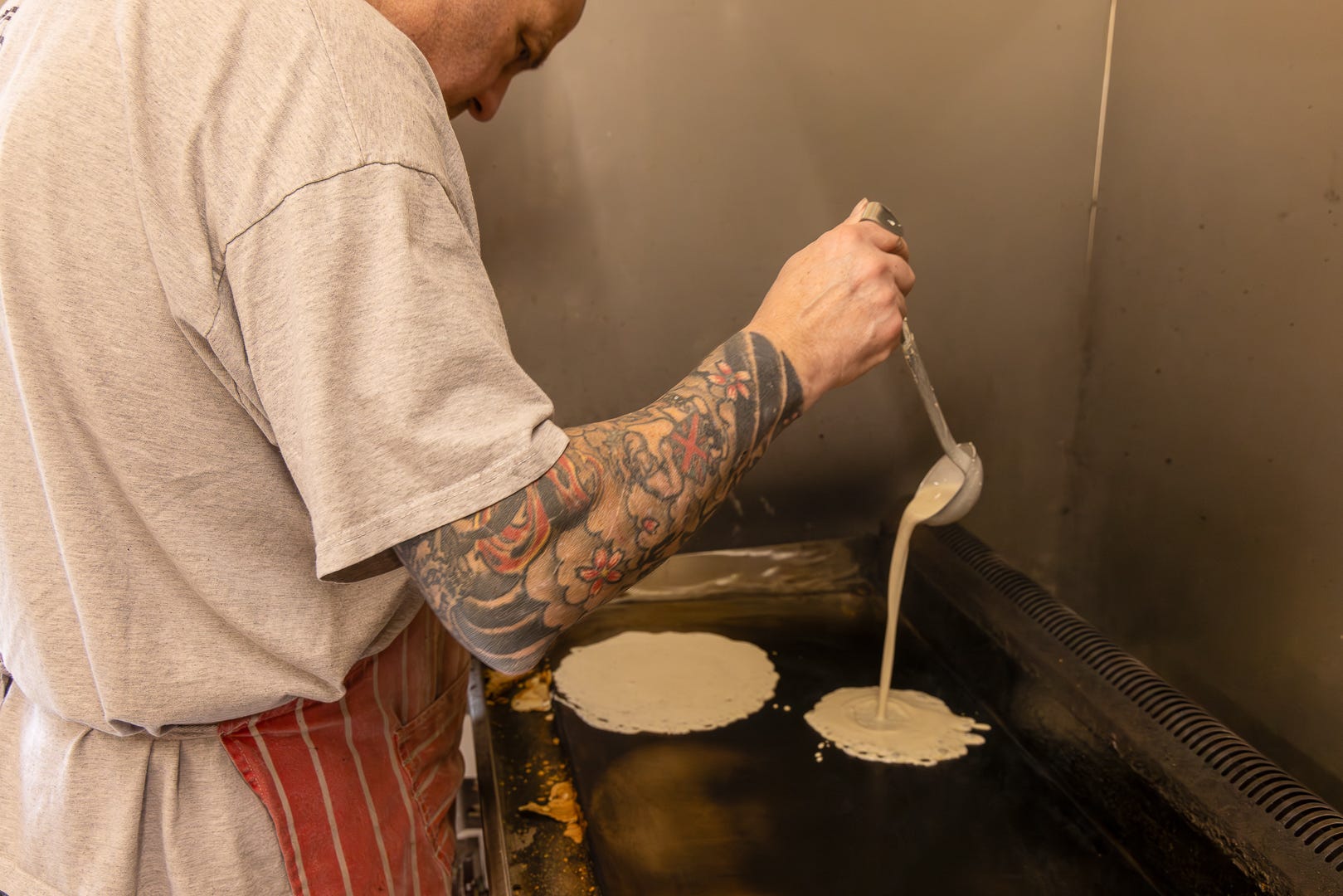
While Berry celebrated our most famous food with humorous verse, David has told the story with a coffee table book populated by striking portraits of oatcake shop owners that also documents their creation, with each shop featuring a closely guarded recipe. Now living in the New Forest, David, like many Stokie exiles, makes sure to stockpile a supply for the freezer every time he’s in the area…
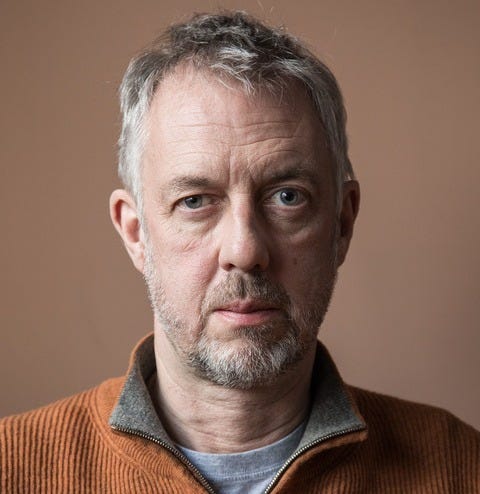
The title of your book comes from the poem Ode to the Oatcake by Arthur Berry. What does Arthur mean to you, and how has he influenced your work?
Arthur’s work celebrated the people and the culture of Stoke in a warts-and-all way, so when I was looking for writing to contextualise my visual story about the oatcake phenomenon, his work was one of the strongest voices.
I don’t know if you have ever tried to explain to someone who is not from Stoke what a Staffordshire oatcake is, but the first stanza of Ode to the Oatcake does a great job of it. The rest of the poem describes in Arthur’s typical tongue-in-cheek way the place of the oatcake in daily life and the significance of the shops that make them. In other words, it encapsulates the story I wanted to tell with my photographs.
How did your experience of growing up in Stoke-on-Trent influence the way you approached this project?
Documentary photography is about telling a true story, and I’m always on the lookout for stories worth telling. I haven’t lived in Stoke for many years, but always returned on a regular basis – ostensibly to visit relatives and friends, but largely to keep my freezer stocked with oatcakes. So the idea for this project was staring me in the face on my Sunday morning breakfast table. I knew there was something unique here, a story worth telling and a history worth recording. For me, it is the individual shops that are unique and that is what I wanted to document.
Returning as someone who now lives elsewhere allows me to see oatcake culture more objectively and perhaps more clearly appreciate its significance. When you live somewhere, you don’t always recognise what makes it special. The oatcake shops, like the city’s artists, writers and engineers, are part of a story that deserves to be more widely known.
You’ve said you thought that the oatcake shops would be in decline and were surprised to find that they’re thriving. Tell us about that
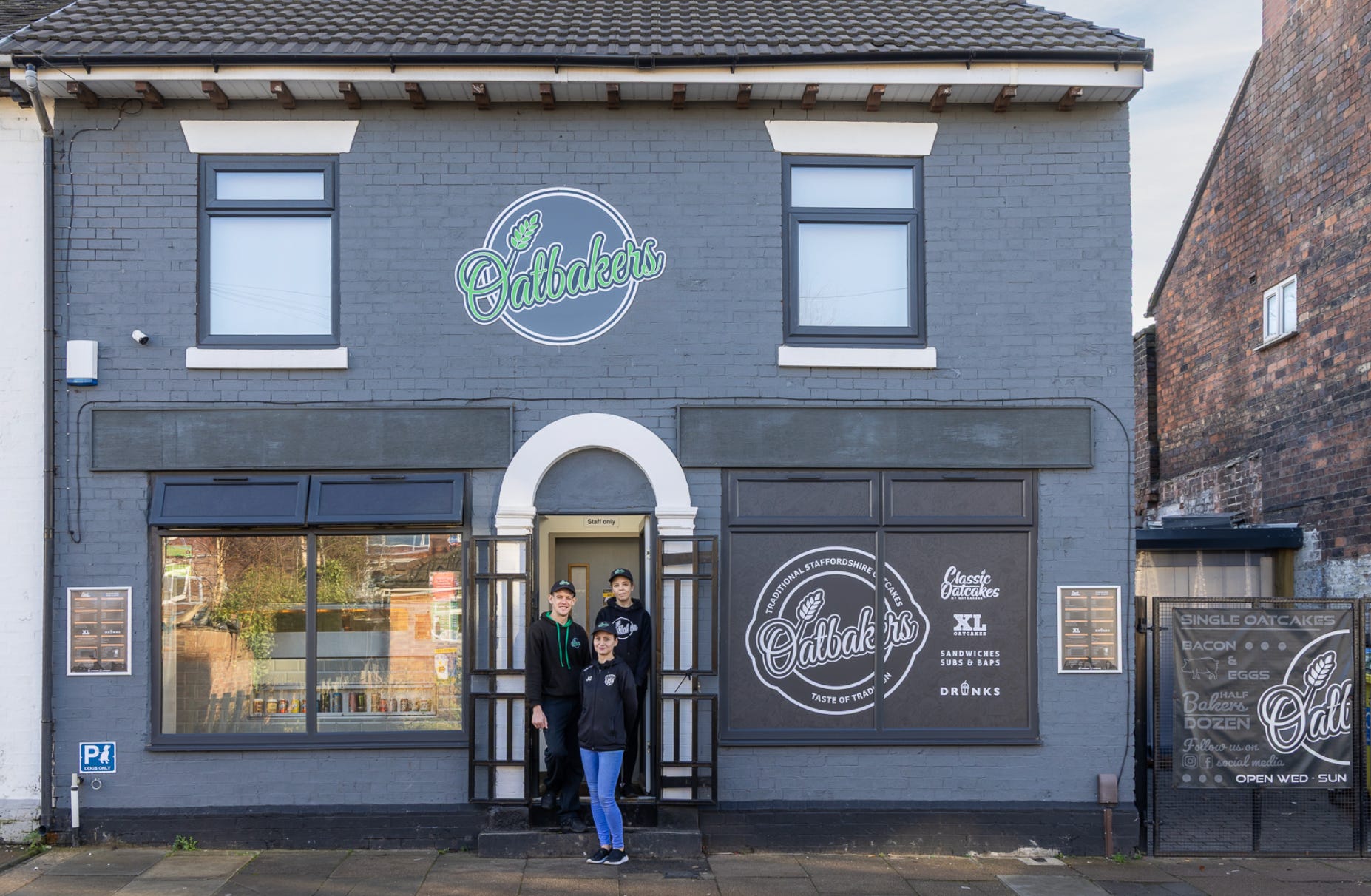
I found that not only are longstanding shops still thriving, but younger owners are stepping in and even launching new ventures. Younger owners are stepping in and even launching new ventures such as Staffordshire Oatcakes in Hanley and Oatbakers in Longport, representing a new generation bringing fresh energy to the trade. It was reassuring to see that this was not simply a fading tradition but one being actively sustained and revitalised.
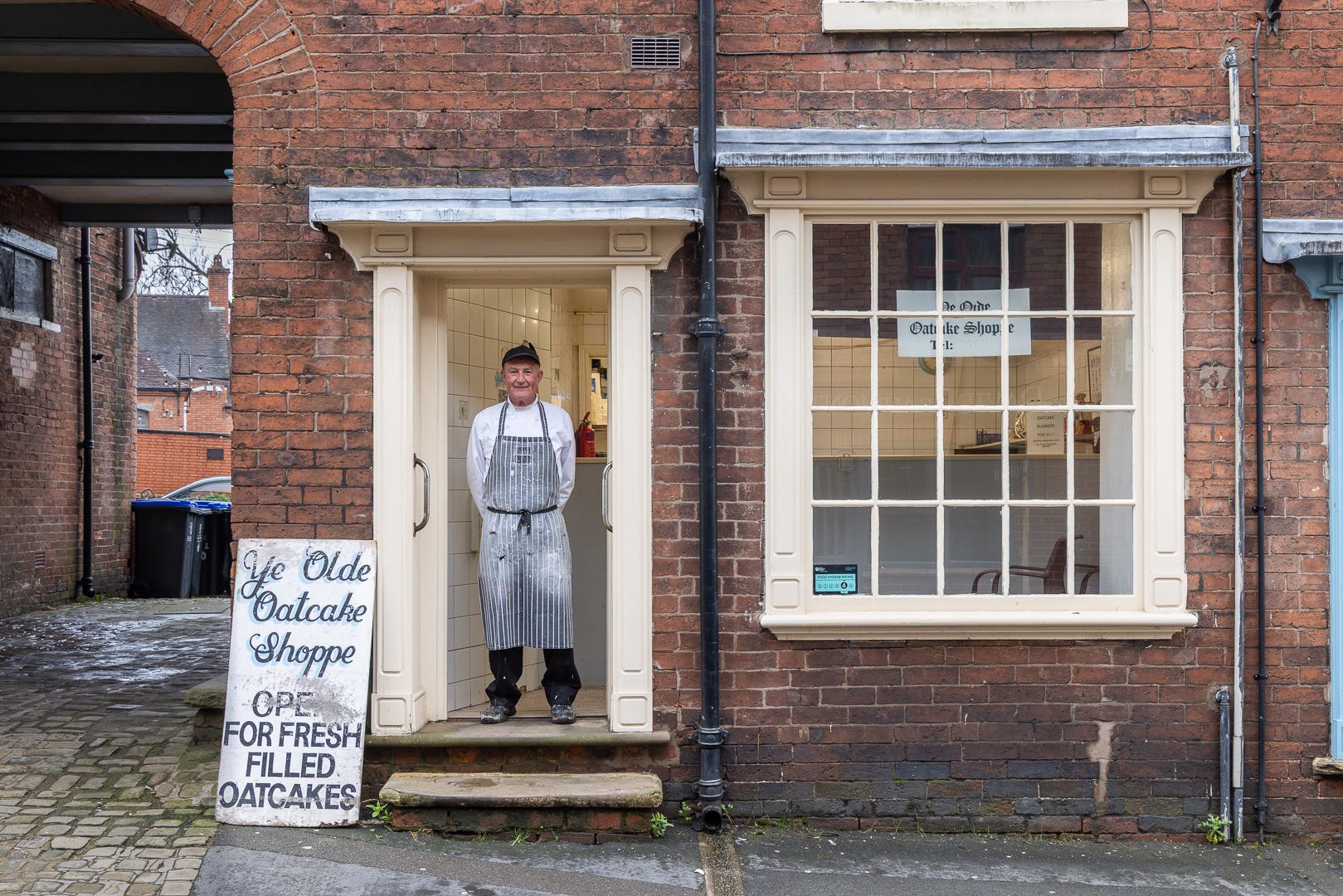
Can you describe your creative and technical approach to documenting both the food and the people behind it?
The creative aspects of the book were important to me, so the technical approach needed to support these. Tunstall Tortillas is primarily a visual book, aiming to provide both a record of the oatcake phenomenon and a window into the culture that it represents. It was important to me both to reinforce the story for those who live in the Potteries and to open the eyes of those further afield to this amazing regional food and cultural practice. To pay homage to the oatcake, as Arthur would have it!
So the technical approach was to make the photographs as natural as possible, to immerse myself in the life of the shops, and draw in the viewer.
The images needed to feel natural and authentic, but also substantial text to provide context. The book has two audiences: those drawn to it because of the oatcake itself, and those interested in photography as an art form.
Did you have a particular narrative or theme you wanted the book to convey beyond the images themselves?
I wanted to show that the Staffordshire oatcake is a unique regional food and cultural phenomenon, one which we should celebrate and promote. Unlike most foodstuffs these days, you buy it not from a supermarket but from your local oatcake shop, each with its own closely-guarded recipe and almost all family-run, some in the same family for generations. There are not many shops these days where people queue patiently outside for their turn to buy.
What challenges did you face in putting the book together?
As I now live nearly 200 miles away from Stoke, there was a lot of travelling. Many of the shops are only open a few days a week, and to capture the whole process involved many hours in a single shop. So a two-day visit might only capture one or two shops. There were also some very early mornings! One aspect I need not have feared was access. It’s a key part of a successful documentary project to have good access to the subject, and when I started out on the project, I wasn’t sure how keen the shop owners would be on a photographer invading their premises and hanging around getting in the way. I needn’t have worried – I was almost universally welcomed, and the owners shared my enthusiasm for telling their story. Not only that, my waistline bore witness to the generous offerings of oatcakes while I was working!
“The oatcake shops, like the city’s artists, writers and engineers, are part of a story that deserves to be more widely known“
How did the book change how you think about oatcakes and their significance?
I think it reinforced what I already thought. Oatcakes are such an integrated part of life in Stoke that many people who live there don’t realise how special they are. Many shopkeepers rise at 1am in the morning, not for vast financial reward, but because they find genuine satisfaction in the work. The food and the shops are significant not only in Stoke but on a national basis because of their uniqueness. And it reminded me how extra-delicious oatcakes are when they are fresh!
You describe the oatcake as “indestructible.” What gives it its staying power, and are you hopeful that will be around for good?
I see the oatcake as a metaphor for the people of Stoke themselves. There is a tremendous history of industry, science and the arts in Stoke, which it is easy to forget after years of economic decline. But Stokies are resilient, friendly and welcoming, fuelled by a great sense of humour and a no-nonsense approach to life.
You say the oatcake is a canvas on which to create your breakfast, or edible culture. Which oatcake shops did you grow up with and how do you eat yours?
Growing up, my local oatcake shop was Mellors in Porthill, which I am pleased to say is still going strong. In those days, most people would walk to their nearest shop, which resulted in strong opinions about which was the best shop. This habit of always visiting the same shop has persisted into the age where people drive everywhere, and I found that strong opinions still exist on the merits of individual shops. For me, it is always bacon and cheese. This still leaves a big question open: Cheddar or Cheshire? Traditions differ between generations, and some shops ask which you prefer.
What are you currently working on?
There are a few things I have uncovered while working on Tunstall Tortillas, so I have some ideas. For example, talking to ex-miners working on the restoration of Foxfield Colliery, I found that they have amazing stories to tell. I am sure that there are many stories around the Potteries to uncover – the question is how to turn them into a visual narrative and present such histories in a manner that is both meaningful and engaging in a world saturated with distractions. These are important stories, but they must remain part of popular culture rather than gathering dust on a library shelf.
David’s book is available from Barewall Art Gallery and via RRB Photobooks for £25
Do you want to nominate someone local to be profiled by The Knot? We’d love to hear from you! Email james@theknot.group with your suggestions
Love this article. Like most Stokies I grew up with oatcakes- my favourite combination has to be crisp bacon and cheese. Such fond memories of my lovely dad, who on his only day off, would bring bacon and cheese oatcakes to my sister and me as waited in bed for this fantastic treat. We had a back oven (coal fired) where the Cheddar cheese would be melted on a metal tray before being placed on the oatcake- absolutely delicious. I do like Box Lane oatcakes but most varieties are fab