
After Stoke-on-Trent and Staffordshire experienced record-breaking temperatures, it becomes harder to ignore that extreme weather is here to stay. North Staffordshire peaked at 33.9°C last week after a “heat dome” stationary area of high pressure parked over western Europe, with a critical incident declared at Royal Stoke due to hospital equipment failures and an influx of dehydrated patients. The extreme heat also triggered school closures and wildfire alerts at country parks.
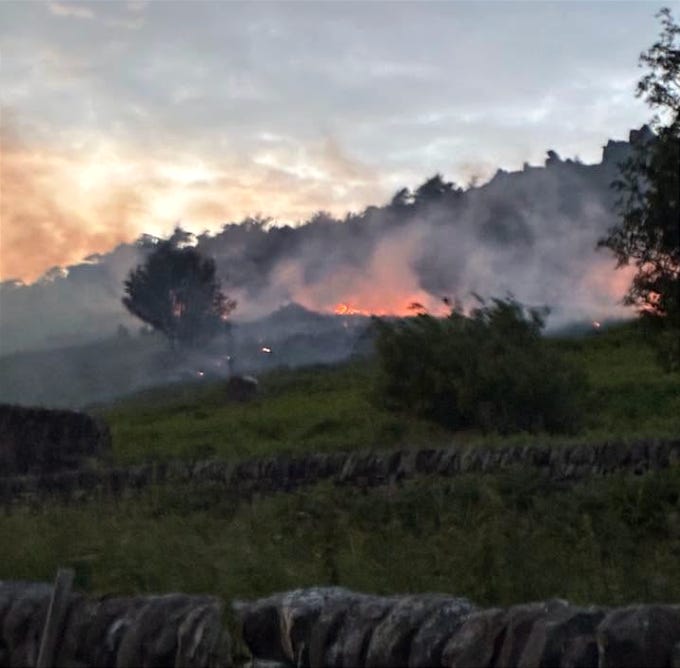
Staffordshire County Council issued urgent emergency pleas banning all barbecues, warning that the parched terrain had created a highly volatile, extreme wildfire risk. This followed a near miss incident at The Roaches last Monday (22 June), when Staffordshire Fire and Rescue Service (SFRS) were called to extinguish a blaze. With bird nesting season at its peak, the fire could have devastated breeding curlew, meadow pipits, and birds of prey and put plants including bog asphodel and sphagnum moss at risk.
Fires can tear through fragile moorland in a matter of minutes, destroying years of conservation work in its wake. The Staffordshire Wildlife Trust has lauched a summer appeal to raise £15,000 to create and maintain firebreaks and restore damaged habitats. It has since increased its fundraising target to £20,000 to help it meet the extra pressures it faces during heatwaves. With the elevated risk, teams are on high alert across reserves so it can support the Fire Service where needed and help wildlife and habitats recover where fires have caused damage.
“Just enjoy the weather”
Public attention on wildfires is focused on high profile spots such as the Roaches but there are many others potentially at risk, including Wetley Moor, a rare and invaluable area of lowland heath at the edge of Stoke, Mark Johnson, a member of Moorlands Climate Action, told The Knot.
The group recently organised a showing of the People’s Emergency Briefing film, which highlights the risks posed by climate change. While the showings were well attended, Johnson said not everyone respected the message.
Johnson added: “We were disappointed by the response of at least one local political leader that said ‘people should just get out and enjoy the weather’ two days before the Roaches caught fire again.”
On a more positive note, he added that it will be working with Staffordshire Moorlands District Council on a plan for adapting to climate change.
“Much of this work should fall to the County Council but, with the exception of their statutory responsibilities for flood prevention, we no longer expect leadership from that source.”
Fires “a lot more scary”
At Staffordshire Wildlife Trust, there is relief that the fire was contained but plenty of trepidation over what may happen next. Reserves officer Roz Lees told The Knot that the recent fires have been ‘a lot more scary’ as they have ignited quicker due to dry vegetation. She now carries her work phone with her all the time and explained they had to employ weekend staff on the Roaches for the first time last summer. It’s not just the fire risk but more storms that are putting pressure on the Trust.
She said: “The winter just gone, we should have been putting fire breaks in the heather, but there were so many storms that we had to tidy all the fallen trees up first.”
The summer appeal will help raise money for equipment such as water backpacks and hose reels, which can help put out small, early-stage wildfires. It has also planted “thousands and thousands” of sphagnum plants, a moorland plant which she describes as “nature’s sponge” as it can hold ten times its weight in water.