



As shopping patterns have evolved dramatically over the past decade or so, with more and more of us shopping online or at retail parks, our high streets have suffered. Independent book stores and the like have made way for vape shops, while many many premises have simply shuttered up, never to open again.
Andy Burnham has made the revival of Britain’s high streets one of his early priorities, giving councils greater ability to refuse new betting shops and adult gaming centres, while vape shops will no longer be permitted to open under the same broad planning category as ordinary shops.
The government is also working with the Planning Advisory Service to establish clearer expectations around high-street design, including shopfronts, signage, neon lighting and oversized logos. Councils and communities are expected to have more of a say over the mix of businesses on their high streets. A new High Streets Strategy, coming later this year, will be backed by £150 million of investment.
Dr Allison Gardner, MP for Stoke-on-Trent South, told Parliament that Longton was “very much on the up”, describing a “real sense of momentum” and growing confidence and pride. She singled out Longton Exchange for supporting traders and attracting new businesses, and highlighted Kiln at Number 12, So Very Dog and Crumbs bakery as examples of businesses bringing fresh energy to the town centre, stating that “The high street is absolutely the heart of Longton.”.
Nevertheless, she sees that there are still problems to be addressed. She has also raised in Parliament the issue of there being too many vape shops on Longton High Street (five at the last count) and has campaigned for a banking hub following the closure of local bank branches.
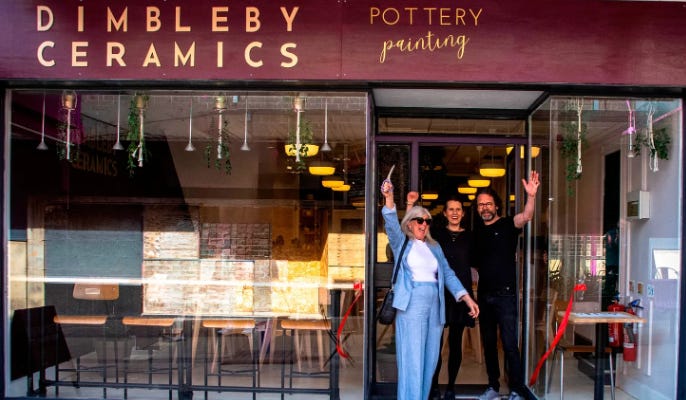
Longton continues to attract new businesses to the high street and surrounding area. This spring, a new independent barber shop Frequency Fade, with DJ decks and darts, opened on Market Street, as did pottery workshop Dimbleby Ceramics, next to sister business Kiln at Number 12. A new toy shop, SDPrime, opened last month inside Longton Exchange, while two established independents, Stitch in Time + Nail Attraction, moved into a larger shared unit at Longton Exchange in May 2026.
Inside the market, meanwhile, new diner Sugar Rush Social, arts supply shop Hustlers of Culture and True Grain DIY & Hardware have all opened in the last couple of months. And the former Wilco unit is soon to be replaced by discount department store Boyes.
With the aim of creating a “high-quality civic gateway”, the Times Square regeneration began in June 2026 as part of a £1.9m Longton Town Centre Improvement Scheme that will build a new civic plaza, update transport and road layout, including new red route traffic management controls, and wider footways and clearer pedestrian links to bridge the gap between Longton Railway Station, the local bus station, the high street, and the nearby Tesco retail park.
“We need to look to the future with hope rather than look back in a nostalgic fog of sadness.” – Mathew Dimbleby, Dimbleby Ceramics
One of the businesses that is helping revive Longton’s futures is the aforementioned Dimbleby Ceramics, which not only sells ceramics but also offers pottery painting and wheel-throwing, with sister business Kiln at Number 12 serving coffee and cakes.
Co-owner and founder Mathew Dimbleby told The Knot that he sees our high streets as becoming not just for shopping, and that both his businesses are now ‘go-to’ destinations in Stoke-on-Trent but, more specifically, Longton. “Food, drink and other fun activities that can be shared with friends and family are activities that keep people in town centres for hours, as they visit several places and immerse themselves in the community and culture of the area. This is how destinations are created.”
This links into his next point: that we can often look back on the high streets of old through rose-tinted glasses. “We hear so many stories from our customers of the bustling shops and cafes in Longton in the previous century. This was mainly due to the thousands of women and men working in all the local pottery factories, plus hour-long lunch breaks! Sadly, with the closure of many large pottery firms and the demise of the long lunch, we will never be able to re-create this. So, modern high streets need to be completely re-thought out and we need to look to the future with hope rather than look back in a nostalgic fog of sadness.”


