




After ISIS took control of his hometown in Iraq, Mohammed Khattab, who is Kurdish, feared for his life. He fled his country and arrived in Derby in 2016, and has been living in Staffordshire since 2022, a period he describes as “the best four years of my life.” Granted leave to remain in 2024, which allows him to live and work in the UK for five years, Mohammed is now employed as a barber in Stafford. I meet him at Asha North Staffordshire, a Hanley-based charity that supports asylum seekers and refugees. After the organisation helped him get back on his feet, Mohammed now regularly cuts men’s hair for free at the centre. “I didn’t want to take benefits,” he says. “I wanted to work, to study, to learn English.”
Another regular at Asha is Albanian-born Vjollca*, who is busy making cups of tea and coffee for a steady stream of visitors on the day I visit. A single mother of two who has been granted refugee status, she states that, like Mohammed, being in the UK has saved her life. “Asha has helped me so much, and I don’t want to just take — I want to give something back too. This is my second home.” A volunteer at her children’s school, Vjollca hopes one day to train as a teacher.
A political hot potato for many not just in the UK but globally, immigration is the problem that no politician seems able to solve as factors including conflict, famine, and political repression in countries like Afghanistan, Syria, Iran, and Eritrea continue to see people fleeing their homes. Even refugees themselves, including Mohammed, acknowledge that there are too many dangerous small-boat crossings. Yet despite successive governments’ promises to curb them, crossings continue. Research published in early 2026 shows more than 41,000 people crossed the Channel in small boats in 2025 — the second-highest total after 2022. The Home Secretary, Shabana Mahmood, recently said the issue was “tearing the country apart”, ahead of an announcement in December that refugees will now wait 20 years for permanent residency and may be removed once their home countries are deemed safe.
In Stoke-on-Trent, reminders of anti-immigrant sentiment are hard to miss. Every time I drive onto the A50 or A500, I see St George’s flags draped over bridges or tied to lampposts — many left there following a 150,000-strong demonstration organised by far-right activist Tommy Robinson in London last September. With a Chinese husband and two mixed-race children, those flags feel like a warning, a sign of a political climate in which far-right narratives are gaining ground both locally and nationally. Reform UK has been running Staffordshire County Council since this year’s May local elections, although councillor Ian Cooper was forced to step down last December after he was found to be a ‘top fan’ of white supremacy site The European Race and for making racist comments online.
Anti-immigration sentiment often runs highest in deprived areas such as Stoke-on-Trent, where public services including housing, health and education are already under pressure. Many residents believe illegal migrants are “jumping the housing queue” or claiming benefits they are not entitled to — despite asylum seekers being unable to claim benefits or social housing until they receive settled status. When Nigel Farage has made claims such as an Afghan male being 22 times more likely to be convicted of rape than somebody born in this country, it has led to outrage and a sense of moral panic even, but when factcheckers have investigated such claims, they found that they were based on outdated or inaccurate information.
When asylum seekers arrive in Stoke-on-Trent, one of their first points of contact is often Asha. Founded in 2005, the charity offers English classes, a mother-and-baby group, legal advice and practical support. One of the city’s most prominent social justice activists, Angela Glendenning, is a founding member. Now 91, she is planning a skydive to raise funds for Asha and Emmaus North Staffs. Asked where asylum seekers in Stoke typically come from, Angela says:, “It’s essentially still Afghanistan, Iraq, Kurdistan, Iran, Eritrea [one of the most repressive countries in the world, with no independent media, no national elections since independence in 1993, and widespread human rights abuses], Sudan and Ethiopia. Very few are ones where they could safely return to their own country.”
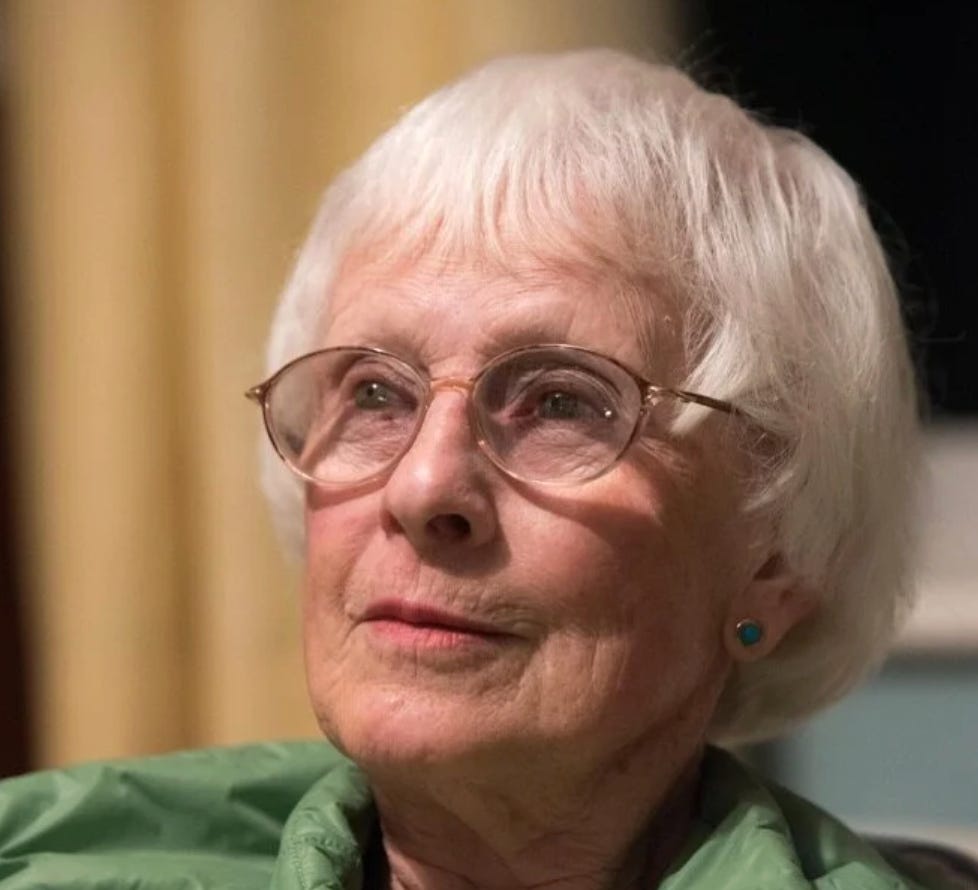
Life as an asylum seeker, she explains, is defined by uncertainty. “They hold onto a hell of a lot of stress and anxiety, and not knowing what your future holds is pretty awful,” says Angela. Many face long waits before their cases are resolved. “Asylum seekers can’t work until they receive refugee status, and the longer you’re out of work, the more deskilled you become.” Angela recalls accommodating an asylum seeker at her home who was suicidal and needed some respite. “He’s now got a degree at Keele and is a qualified social worker.” Alongside supporting asylum claims and distributing food and clothing, Asha is keen to integrate its members into the wider community. “The Hanley Park Community Hub does a walk every Wednesday and asked if our members wanted to join. There seems to be a building reciprocity between them; some asylum seekers have helped the park out with gardening tasks.” Around 50 Asha members, including the charity’s drumming circle, also took part in the centenary parade this June.
While overall migration to the UK has risen, Angela points out that asylum seekers represent “an infinitesimal proportion” of migrants entering the country, compared with those arriving on visas. In Stoke, for example, there were around 1,280 asylum seekers in the city in December 2024; with 258,000 residents, that represents less than 0.5% of residents. She warns that current policies risk damaging the UK’s own interests. “We need care workers, but they’re being stopped. We’re trying to reduce immigration figures at the expense of our own jobs market.”
“Asylum seekers represent an infinitesimal proportion of the number of people who come here on visas.”
- Angela Glendenning, local activist
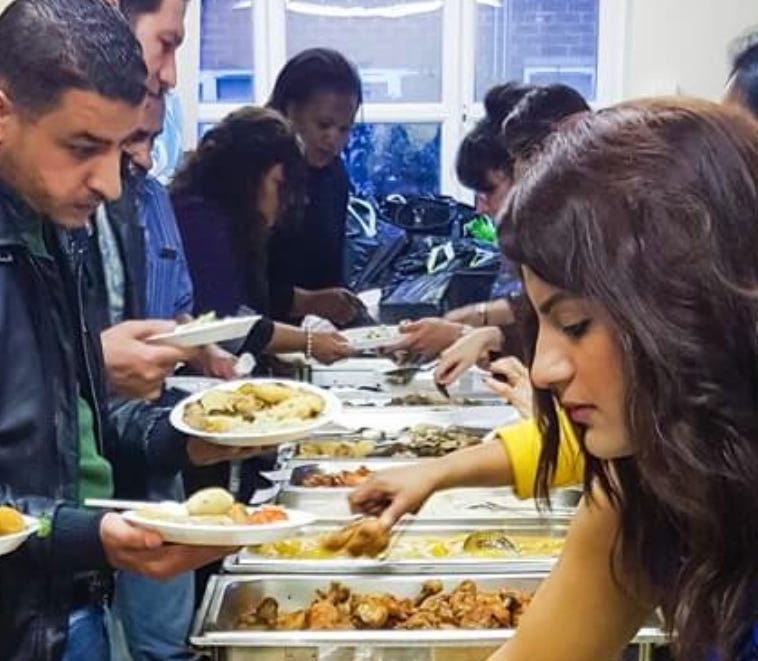
At Asha’s Friday community lunch, which is open to all local residents, the atmosphere is warm and lively. Among the staff is Keita Facinet, originally from Guinea and once an asylum seeker himself. Now married to a British woman and fluent in several African languages, he coordinates digital inclusion programmes and supports unaccompanied minors. He began as a volunteer in 2014 and is now a central figure at the charity, stopping to share jokes, offer advice and ask members if they will be attending certain activities in-between bites of lunch. “Stoke is my home now, and Asha is home. Even on annual leave, I want to be here. When I was in the asylum process, I got very depressed, so I’ll never forget what Asha means to me.”
Police regularly visit the centre to check on safety, and MPs sometimes drop in for lunch. Asha also runs youth groups aimed at preventing young people from becoming vulnerable to crime. Keita says he personally hasn’t encountered racism in Stoke, though he knows it exists. Many asylum seekers, he adds, want to stay in Stoke even after being granted status, despite being moved elsewhere by local authorities.
He is keen to stress the desperate situations that many of Asha’s members seek to escape. “People think asylum seekers come to take their money or homes, but they’re fleeing persecution. Back home, many had jobs and businesses. Some are engineers and doctors. They’re here to save their lives.” He also highlights the prevalence of female genital mutilation (FGM) in many African and Asian countries, which continues to endanger women and girls in parts of Africa and Asia.
Asha’s CEO, Godefroid Seminega, arrived from Rwanda in 2005 and, like Facinet, has built a life and career in Stoke. Formerly working in public health, he initially lived in Croydon before securing a job supporting refugees and asylum seekers in North Staffordshire. He progressed from volunteer to service coordinator, manager and now CEO. “I like Stoke,” he says simply. “It’s my home.”
He describes the challenges facing new arrivals, including overcrowded accommodation and the complexity of the asylum system. While funding pressures persist, he believes the greatest challenge is “the rise of racism and the far right”. Asha now supports around 500 people a week. “For many asylum seekers, Asha is home. They often arrive early just to sit, talk and feel safe.”
“The biggest challenge we are facing isn’t funding but the rise of the far right and racism”
Godefroid Seminega, CEO, Asha North Staffs
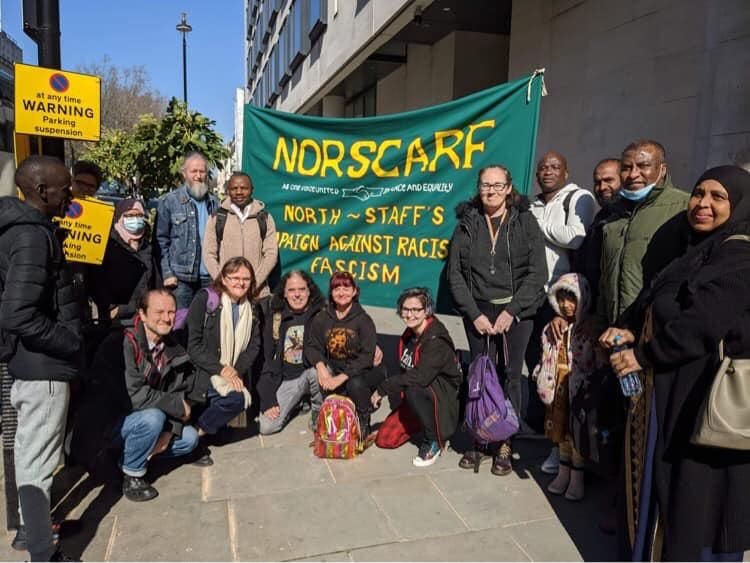
Another organisation that works closely with asylum seekers and refugees in the city is North Staffordshire Campaign Against Racism and Facism (NorSCARF). Assistant secretary Chris says the biggest challenge is the “feverish” narrative around migrants. Founded in 1977, it campaigns through marches, community stalls, partnerships with trade unions and arts groups, and counter-protests, particularly outside the Quality Hotel in Hanley, where far-right groups regularly gather. Its aim is to ensure asylum seekers know they are welcome.
Chris believes some of Reform UK’s support stems from public anger over austerity and long-term funding cuts. Stoke-on-Trent City Council has experienced a real-terms reduction in spending power of around 25 per cent since 2010, alongside low wages, educational inequality, industrial decline and unaffordable housing. Such issues, however, have complex causes, from lower educational attainment in Stoke to a housing market geared toward higher earners. “Reform point the finger at people arriving on dinghies,” he says, “but that doesn’t explain people’s real problems. Rising rents, mortgages and the cost of living are the real issues.”
Much of NorSCARF’s work involves challenging misconceptions, he says. “People think migrants get luxury accommodation or endless benefits, but the hotels used for asylum accommodation were often on the brink of closing down and then offered a contract with the Home Office. They’re not luxurious; some are infested with rats. People complain that migrants are given meals and mobile phones, but we have an obligation in this country under the European Convention of Human Rights to accept asylum seekers when we can, and provide them with adequate resources so they can exist in a bit of dignity,” he points out.
“The major problem for us is the feverish narrative and misconceptions around migrants.”
- Chris, assistant secretary, NorSCARF
Stoke Central MP Gareth Snell agrees that many anti-immigrant talking points are misleading. “If you took out everyone in the NHS who is here on a visa or because they chose to move here, it would collapse,” he says. At the Royal Stoke, for example, data from 2023 indicates that more than 20 per cent of staff were international recruits or non-British nationals.
Snell believes politicians must do more to celebrate the contributions of diverse communities and challenge misinformation, especially myths about benefits and jumping the housing queue. Asylum seekers in self-catered accommodation cannot claim benefits and receive £49.18 per week to live on, while illegal entrants have no entitlement to housing at all.
He is also hopeful that those people who do have genuine claims for asylum can be processed more quickly, get on with their lives, work, contribute, become good members of society, and become “our friends, neighbours, and fellow citizens.” “Conversely,” he adds, “if we find that people have no reason to be in the UK, we will ask them to leave and arrange for their safe return to their home country,” he stresses.
“Many think those who enter the country illegally are entitled to benefits, but they’re not”
Gareth Snell, MP for Stoke Central
While immigration is ultimately shaped by government policy, communities play a vital role in influencing local attitudes. In Stoke-on-Trent and Staffordshire, organisations such as Asha and NorSCARF provide practical support, foster social connections, and remind us that behind every statistic is a person with a story to tell. From planting flowers in Hanley Park to training for careers in social work, many refugees and asylum seekers are eager to contribute to the places they now call home.
Despite some anti-immigrant sentiment in Stoke-on-Trent, many local residents have helped them feel welcome. As Mohammed puts it, “I’m keen to stay in Stoke — there are so many good people here.” Vjollca puts it another way: “For 10 years, I felt like a flower without roots. But roots can grow again.”
*Name has been changed
Want more on migration? Check out Settling Stoke, which explores human migration in Stoke-on-Trent by photographer Sam Ivin
Have something to say about this story? Leave your comments below. We know this is a hot topic but please remember to be considered in your responses.
Those flags need taking down. They are not there for patriotic reasons. They were funded by Reform for no other reason to incite racism and division and that's not what being British means ☹️
Thank you so much for highlighting these charities. I was at Asha recently dropping off a number of donations. It’s a great pity that the facts don’t gain as many column inches as the myths